Online CPR, AED & First Aid Course
Canadian Health Care Provider Training Institute (CHCPTI) is a beginner-friendly online program designed to teach essential lifesaving basics—how to respond to common medical and injury emergencies, and how to perform CPR and choking rescue for adults, children, and infants, including safe AED use. The course walks learners through what to do first at an emergency scene (consent, safety checks, infection prevention), how to recognize when to activate emergency services, and how to provide practical first aid for traumatic and environmental injuries.
Who this course is for
This course is designed for:
-
Beginners who want a clear introduction to CPR, AED, and first aid fundamentals
-
Parents, caregivers, and family members who want to be prepared for choking, injuries, or sudden collapse
-
Students and job seekers who want baseline safety knowledge and a course completion credential
-
Workplace teams and community members who want general emergency response awareness
What you’ll learn (high level)
By the end, you’ll be able to:
-
Check for danger, assess responsiveness, and decide when to call for help
-
Describe what should be in a basic first-aid kit and how to reduce infection risk
-
Provide first-aid responses for bleeding, burns, suspected fractures, and other common injuries
-
Recognize signs of heat illness, hypothermia, bites/stings, and poison exposure
-
Explain the steps of CPR and choking rescue for adults, children, and infants
-
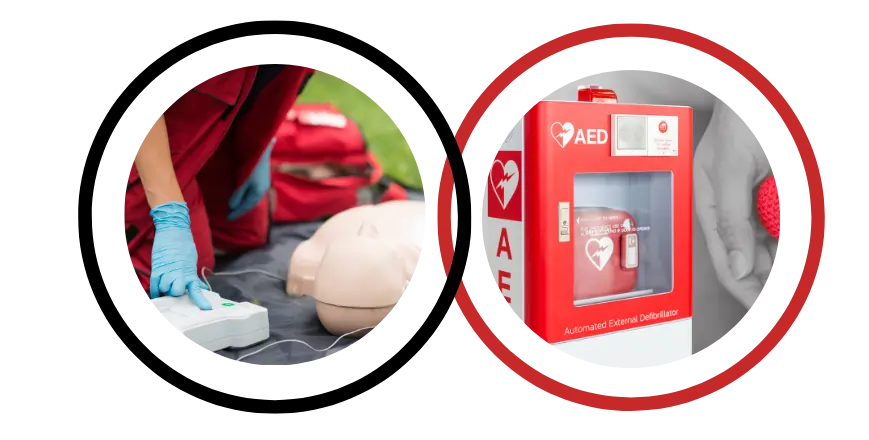
Understand how to use an AED safely and why early defibrillation matters
Certificate & course access
This course is listed as beginner-level and does not offer a completion certificate.
Important note
 Please note: This is not a Heart & Stroke Foundation course.
Updated on Jan 2026
For training with certification, you can reach out to our partner. They provide WSIB-approved courses
Training with certification
-
1
 First Aid
This lesson explains what first aid is, when to call emergency services, how to get consent and check responsiveness, how to keep yourself safe at the scene, how to reduce infection risk with handwashing and protective gear, and what supplies to keep in a basic first aid kit.
-
2
Responding to Medical Emergencies
Medical problems can be mild or life-threatening. A trained first aid responder must quickly recognize warning signs, provide basic care, and activate emergency services when needed.
-
3
First Aid for Traumatic Injuries
This lesson covers first aid responses to traumatic injuries, including how to control bleeding (pressure and tourniquets), manage dental injuries and nosebleeds, handle punctures and impaled objects, provide care for eye, head, and spine injuries, support bone and joint injuries (splinting and amputations), and treat burns and electrical injuries while knowing when to call EMS.
-
4
Environmental Injury and Illnesses
This lesson explains how to provide first aid for common outdoor/environment emergencies—bites and stings (including ticks and snakebites), heat illness, sunburn, frostbite, hypothermia, and toxin/poison exposure—focusing on warning signs, immediate care, and when to call EMS.
-
5
Adult CPR, AED and Choking
This lesson teaches how to recognize cardiac arrest, perform high-quality adult CPR (compressions and breaths), use a mask and an AED safely, activate EMS quickly, and manage choking in adults with abdominal thrusts and CPR if the person becomes unresponsive.
-
6
Child CPR, AED and Choking
Children have breathing difficulties more often than they have actual heart problems. Therefore, it is important to begin CPR quickly and perform five sets of CPR for one rescuer or ten sets of CPR for two rescuers before going to get additional help. One set of CPR for one rescuer consists of 30 compressions and two breaths, and one set of CPR for two rescuers consists of 15 compressions and two breaths.
-
7
Infant CPR and Choking 1

Please note: This is not a Heart & Stroke Foundation course.
Updated on Jan 2026
For training with certification, you can reach out to our partner. They provide WSIB-approved courses
Training with certification
 Google