IPAC Online Training Canada | Infection Control Certificate | $20 | CHCPTI
- Description
- Curriculum
- Notice
- Reviews
- Grade
IPAC Certification Online | Infection Control Course for Canadian Healthcare Workers
If you work in a Canadian healthcare setting and need to meet IPAC training requirements, you’ve found the right place. This IPAC certification online is designed specifically for healthcare workers across Canada — from personal support workers and nurses to dental staff, home care aides, and long-term care teams. For just $20, you can complete a fully self-paced infection control course, earn a downloadable certificate of completion, and meet your workplace IPAC education requirements — all in about one hour.
Infection Control and Prevention Basics for Healthcare Workplaces (Canada) is a beginner-level IPAC course online built to give every healthcare worker a confident, practical foundation in infection prevention and control. Whether you’re new to healthcare, refreshing your knowledge, or fulfilling an employer or regulatory requirement, this course walks you through everything you need to know to protect yourself, your coworkers, and the people in your care.
What Is IPAC and Why Does It Matter?
Infection Prevention and Control — commonly known as IPAC — is the set of evidence-based practices and principles that healthcare workers use to prevent the transmission of infectious agents in care environments. IPAC applies everywhere healthcare is delivered: hospitals, clinics, long-term care homes, dental offices, home care settings, and community health programs.
Infections in healthcare settings don’t just happen to vulnerable patients — they can happen to any healthcare worker who isn’t consistently applying the right precautions. Microorganisms (germs) spread quickly through direct contact with hands, surfaces, and equipment, as well as through droplets, airborne particles, and contact with blood and body fluids. The consequences of poor infection control can range from a mild illness to a life-threatening healthcare-associated infection (HAI), an outbreak in a facility, or a serious occupational exposure.
This is why IPAC certification is increasingly a condition of employment across the Canadian healthcare sector. Employers, licensing bodies, and provincial health ministries expect frontline workers to understand and consistently apply infection prevention practices — not as an occasional task, but as a daily standard of care. Completing a recognized infection control course is the fastest way to demonstrate that competence and protect your career.
About This IPAC Certification Online
This IPAC course online is delivered by the Canadian Health Care Provider Training Institute (CHCPTI), a training provider based in Mississauga, Ontario, with a focus on practical, accessible, and affordable healthcare education for the Canadian workforce.
The course is structured around two core modules that together cover the full spectrum of foundational IPAC knowledge required in Canadian healthcare workplaces. Each module includes a short video lesson followed by a knowledge-check quiz to reinforce what you’ve learned. The entire course takes approximately one hour to complete, and you can pause and resume at any time — making it genuinely compatible with busy shift schedules and personal commitments.
Upon successful completion of both modules and their quizzes, you receive a downloadable IPAC certification certificate issued by CHCPTI. This certificate can be saved, printed, and submitted to employers as evidence of foundational IPAC training — suitable for onboarding packages, HR compliance files, and professional development records.
What You’ll Learn in This Infection Control Course
Module 1 — Understanding Infection Prevention and Control
The first module of this infection control course builds your foundational understanding of how infections occur and spread in healthcare environments. You’ll begin with the concept of the chain of infection — a model that describes the six links required for an infection to spread: the infectious agent, a reservoir, a portal of exit, a route of transmission, a portal of entry, and a susceptible host. Understanding this chain is essential because breaking even one link prevents transmission.
You’ll learn the five primary routes of transmission relevant in healthcare settings:
- Contact transmission — the most common route, occurring through direct skin-to-skin contact or indirect contact with contaminated surfaces and equipment
- Droplet transmission — spread through respiratory droplets produced when an infected person coughs, sneezes, or talks
- Airborne transmission — spread through small particles that remain suspended in the air and can be inhaled over longer distances
- Vehicle transmission — spread through contaminated food, water, medications, or equipment
- Vector-borne transmission — spread through insects or other animals (less common in healthcare but relevant in community settings)
This module also introduces Routine Practices — the core IPAC framework used across all Canadian healthcare settings. Routine Practices are based on the foundational principle that blood, body fluids, secretions, excretions, mucous membranes, non-intact skin, and soiled items must always be treated as potentially infectious — regardless of a patient’s known diagnosis or infection status. This approach eliminates the risk of assuming a patient is “safe” when they may be carrying an undiagnosed or asymptomatic infection.
You’ll also be introduced to Additional Precautions — the category- and transmission-based measures that are layered on top of Routine Practices when a patient is known or suspected to have a specific communicable condition. The three types of Additional Precautions covered in this IPAC certification online are Contact Precautions, Droplet Precautions, and Airborne Precautions — each with specific requirements for PPE selection, room placement, and patient management.
Finally, Module 1 introduces point-of-care risk assessment (PCRA) — a brief mental evaluation that every healthcare worker should complete before every patient interaction. PCRA involves asking yourself: What am I about to do? What is the risk of exposure? What precautions do I need to take? This skill is central to modern IPAC practice and is emphasized throughout the rest of this IPAC course online.
Module 2 — Elements of Routine Practice
Module 2 moves from concepts into daily clinical practice, covering the specific actions that make up an effective Routine Practices program. This is where the infection control course becomes immediately applicable to your day-to-day work, regardless of which healthcare setting you work in.
Hand hygiene is covered in depth, and for good reason — it is consistently recognized as the single most important action a healthcare worker can take to prevent the spread of infection. You’ll learn the two methods of hand hygiene (alcohol-based hand rub and soap-and-water handwashing), the clinical situations that require each, and the correct technique for both. The WHO’s 5 Moments of Hand Hygiene framework is referenced to help you understand exactly when hand hygiene is required during a patient interaction.
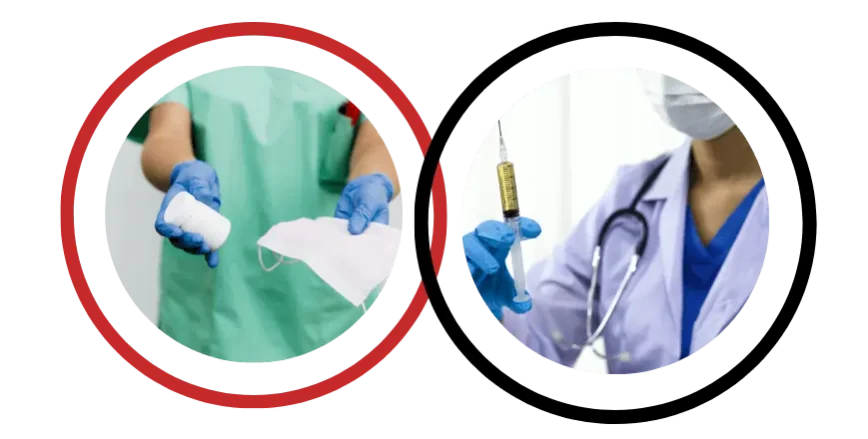
Personal protective equipment (PPE) is the second major focus of Module 2. Choosing the right PPE for the right situation — and using it correctly — is a core component of any IPAC certification. You’ll learn how to select appropriate PPE based on the anticipated exposure and the type of precautions in place, how to safely don (put on) and doff (remove) PPE to avoid self-contamination, and why the order of removal is just as important as wearing it in the first place.
Respiratory etiquette — practices that reduce the spread of respiratory infections from staff, patients, and visitors — is also covered, including masking protocols, tissue use, and physical distancing principles that remain relevant in a post-pandemic healthcare environment.
The module also covers patient and client management principles under Routine Practices, including:
- Safe placement of patients with known or suspected infections
- Guidance for managing visitors in care settings
- Proper handling, cleaning, and disinfection of patient care equipment
- Safe collection, labeling, and transport of specimens
- Environmental cleaning and the healthcare worker’s role in supporting it
- Safe handling of sharps and needles to prevent bloodborne exposure
- Post-mortem care considerations under IPAC principles
By the end of Module 2, you’ll have a clear, practical understanding of how to integrate Routine Practices into every aspect of your work — making this IPAC course online immediately useful from the moment you complete it.
Who Should Take This IPAC Course Online?
This IPAC certification online is designed for anyone working or training in a Canadian healthcare environment who needs foundational infection control knowledge. It is intentionally written at a beginner level, with no prerequisites required.
The course is ideal for:
- Personal Support Workers (PSWs) and Health Care Aides working in LTC homes, retirement residences, or home care settings
- Nurses and nursing students completing onboarding or refresher IPAC training
- Regulated healthcare professionals including physiotherapists, occupational therapists, dental hygienists, paramedics, and medical laboratory technologists
- Dental office staff — both clinical and administrative — who require IPAC training for infection control compliance
- Home care and community care workers providing support in private homes and community settings
- Clinic and hospital staff in both clinical and non-clinical roles, including reception, housekeeping, porters, and maintenance workers
- Long-term care (LTC) facility staff across all departments — Ontario legislation now requires all LTC homes to ensure staff receive IPAC education
- Volunteers and students entering healthcare placements for the first time
- Managers and supervisors who want a foundational understanding of IPAC to better support their teams
If your work brings you into contact with patients, residents, clients, or the environments where they receive care, this infection control course is for you.
Why Get Your IPAC Certification Online With CHCPTI?
There are several options for IPAC training in Canada — including a free course offered by Public Health Ontario. So why choose CHCPTI’s paid IPAC certification online? Here’s what sets this course apart:
- You get a certificate. Many free IPAC resources don’t issue a formal certificate of completion. CHCPTI does — and it’s downloadable immediately upon finishing the course, making it suitable for HR files and employer compliance records.
- No government account required. The PHO course requires a My PHO account and navigation through a government LMS. This course offers instant registration and immediate access.
- Modern, mobile-friendly platform. Complete the course on your laptop, tablet, or phone — no technical setup required.
- Support is available. Have a question? CHCPTI offers support by phone, WhatsApp, and email during business hours. You’re not learning alone.
- Canada-aligned content. The course reflects Canadian IPAC guidelines including those from Public Health Ontario and the Provincial Infectious Diseases Advisory Committee (PIDAC) — not US or international standards.
- Affordable. At just $20 CAD, this is one of the most accessible IPAC certifications available in Canada. The entire cost is less than one hour of most healthcare workers’ wages.
IPAC Certification Requirements in Canada — What You Need to Know
IPAC training requirements vary by province, setting, and professional role — but the direction across Canada is clear: infection prevention and control education is becoming a standard expectation for all healthcare workers, not just IPAC specialists.
In Ontario, the Fixing Long-Term Care Act requires every LTC licensee to ensure that an IPAC Lead is designated and that staff receive IPAC education. Similar requirements are being adopted in home care, retirement homes, and community health settings across the country. Accreditation standards for hospitals and clinics increasingly include IPAC competency as a quality and safety indicator.
For healthcare workers in regulated professions, IPAC training may also count toward continuing education requirements with your provincial college or licensing body. This IPAC certification online provides a documented, timestamped record of completion that supports those requirements.
Even where IPAC training is not yet legally mandated, completing a recognized infection control course demonstrates professionalism, commitment to patient safety, and readiness for employment — qualities that Canadian healthcare employers actively look for when hiring.
Enroll in Your IPAC Certification Online Today
Getting your IPAC certification online through CHCPTI takes about one hour and costs just $20 CAD. There are no prerequisites, no scheduled class times, and no waiting — register now and start immediately.
By the time you finish, you’ll have a solid, Canada-aligned understanding of infection prevention and control fundamentals, a downloadable certificate you can use with any employer, and the confidence to apply Routine Practices and Additional Precautions correctly in your daily work.
Healthcare workers across Canada — PSWs, nurses, dental teams, home care workers, LTC staff, and more — have trusted CHCPTI for affordable, practical, and recognized IPAC training. Join them today.
-
1
 Synopsis and Learning Objectives
Module 1 identifies what infections are, how they spread, and how routine practices and additional precautions can help prevent or control the possible spread of infectious agents in any health care setting.
-
2
 How are infection spread
This lesson explains how infections spread through the chain of infection (source, transmission, and host). It describes the five routes of transmission and shows how routine practices—like hand hygiene, PPE, and cleaning—help prevent health care–associated infections. It also introduces when and why additional precautions (contact, droplet, airborne) are needed.
-
3
 Module 1 Quiz
-
4
Synopsis and Learning Objectives
Module 2 explains how to prevent infection spread using proper hand hygiene, correct use of PPE, respiratory etiquette, and safe patient/client/resident management in health care settings.
-
5
Hygiene and PPE / Patient and client care
This lesson teaches how to prevent infection spread using routine practices. You will learn correct hand hygiene methods, how to choose and safely remove PPE, how to follow respiratory etiquette, and how to manage patients/clients/residents safely through proper room placement, visitor guidance, equipment handling, cleaning, specimen collection, education, and post-mortem care.
-
6
Module 2 - Quiz
Disclaimer:
⚠️ Please note: This is not a Heart & Stroke Foundation course.
⚠️ This training serves as a basic introduction to IPAC for healthcare workers and professionals.
This is not a comprehensive course. You may find that you need to take additional training depending on your scope of work. Public Health of Ontario and City of Toronto provide lots of resources and a free IPAC class for the general public and for healthcare workers to expand their knowledge even further. CHCPTI cannot be held liable for any information received in this course or for any omissions in IPAC requirements or any potential negative health outcomes for your clients. This course does not replace any specific recommendations of your local health department or your Doctor's recommendations.
-
Course name: Infection Control and Prevention Basics for Healthcare Workplaces (Canada)
-
Delivery: 100% online, self-paced
-
Level: Beginner / foundational IPAC training
-
Format: Short lessons + knowledge checks (recommended)
-
Certificate: Certificate of completion after successful completion (recommended to include)
-
Key topics: Chain of transmission, Routine Practices, Additional Precautions, point-of-care risk assessment, hand hygiene, PPE overview, reducing cross-contamination
- No formal prerequisites (recommended for a “basics” course)
-
Ability to read and understand workplace health/safety training content in English (or French, if you offer it)
-
Device with internet access (laptop/tablet/mobile) + updated browser
-
Audio enabled (if narration/video is included)
This course is ideal for people working or training in Canadian healthcare settings, including:
-
Personal Support Workers (PSWs), Health Care Aides, Continuing Care Assistants
-
Nurses, nursing students, and other regulated healthcare professionals
-
Clinic, hospital, and long-term care staff (clinical and non-clinical)
-
Dental, paramedical, and allied health teams
-
Home care and community care workers
-
Housekeeping/environmental services, porters, reception/front desk, maintenance, volunteers, and anyone who may be exposed to infection risks in healthcare environments

 Google