- Description
- Curriculum
- FAQ
- Notice
- Reviews
- Grade
This online TDG certification course meets the legal training requirement for anyone who handles, ships, or transports dangerous goods in Canada. It teaches the rules under the Transportation of Dangerous Goods Act and covers classification, documentation, labeling, packaging, and emergency response. Whether you are new to dangerous goods or renewing your credentials, this course is for you. Developed by CHCPTI, the training runs fully online. You can start right away and finish at your own pace without fixed class times, fitting easily around any shift or work schedule. Browse all CHCPTI safety courses here.
What Is TDG Certification and Why Does It Matter? TDG stands for Transportation of Dangerous Goods. In Canada, the Transportation of Dangerous Goods Act sets the rules for how workers handle and move hazardous materials across road, rail, air, and marine transport. The law applies to anyone who touches dangerous goods, not just the driver. These materials include flammable liquids, compressed gases, toxic substances, corrosives, and explosives.
Incorrect handling can lead to severe results. A spill or fire can hurt workers, endanger the public, and cause lasting environmental damage. That is why completing a TDG certification is the law, not an option. Transport Canada strictly enforces these regulations, and employers who skip training face fines and legal risks. A recognized TDG certification protects your workers and your business simultaneously.
TDG Certification Course Overview
-
Course Title: Transportation of Dangerous Goods (TDG)
-
Format: Online, self-paced with module quizzes
-
Focus: Classification, documentation, labeling, packaging, and emergency response
-
Certificate: Downloadable and printable upon successful completion
-
Renewal: TDG certification requires renewal every three years under federal regulations
-
Who It Is For: Anyone who handles, ships, receives, or transports dangerous goods
The Main Parts of TDG Certification Regulations The TDG Act organizes requirements into several key areas. Anyone who handles or transports dangerous goods must complete proper training to earn their TDG certification. The regulations group dangerous goods into nine hazard classes, each with specific handling and transport rules. Shippers must prepare shipping documents that clearly describe the hazardous materials they send, and workers must apply the correct labels and placards to identify hazards and warn others.
Shippers must use approved packaging and containers to prevent leaks, spills, and accidents. For certain high-risk goods, an Emergency Response Assistance Plan (ERAP) must be in place before transport begins. Finally, workers must report any incidents, such as a release or accident, following exact reporting requirements.
What You Will Learn – Module by Module 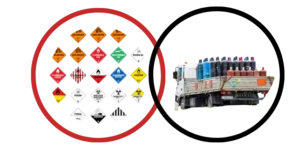
Module 1 – Introduction to TDG Regulations This module introduces the Transportation of Dangerous Goods Act. It explains the purpose of the Act, what counts as a dangerous good under the law, and who the rules apply to—shippers, carriers, and handlers alike. You will understand your role before moving into the technical content required for your TDG certification.
The module covers the nine hazard classes of dangerous goods, which group materials by their specific risks:
-
Class 1: Explosives
-
Class 2: Gases (flammable, non-flammable, and toxic)
-
Class 3: Flammable liquids
-
Class 4: Flammable solids (spontaneously combustible and water-reactive)
-
Class 5: Oxidizing substances and organic peroxides
-
Class 6: Toxic and infectious substances
-
Class 7: Radioactive materials
-
Class 8: Corrosives
-
Class 9: Miscellaneous dangerous goods
You will learn to identify the correct class for a product and understand how that dictates safe handling. The module also explains packing groups, which assess the danger level of a substance. Group I carries the highest risk, Group II poses a medium level, and Group III carries the lowest risk. Knowing the packing group helps you choose the correct container and apply the required safety marks.
Module 2 – Safety Marks, Labels, and Placards Safety marks communicate critical hazard information to workers, emergency responders, and the public. These marks appear on packages, containers, and vehicles and must meet specific design and size rules. Failing to use the correct mark is a serious violation that can invalidate your TDG certification compliance.
Labels go on individual packages, while placards go on vehicles and large containers. Each hazard class requires a specific design, and some goods require multiple labels when they carry multiple hazards. You will learn how to read and apply these marks correctly for each shipment. The module also covers special marks like the UN number, proper shipping name, and quantity markings. These details help emergency responders identify substances quickly during an incident, reducing response times and minimizing harm.
Module 3 – Documentation and Packaging This section covers the shipping documents required for every shipment. A valid document includes the UN number, shipping name, hazard class, packing group, quantity, and emergency contact information. You will learn how to prepare these records correctly and understand the consequences of missing or incomplete paperwork.
TDG packaging standards approve specific container types for each class and packing group. Workers must use approved containers, inspect them before use, and seal them properly. Using unapproved or poorly sealed containers can cause spills, accidents, and regulatory fines. The module introduces “means of containment,” the official term for any container holding dangerous goods. Small containers, large containers, and portable tanks each have different rules and approval markings. You will learn to identify the right type for your goods and verify the required approvals.
Module 4 – Emergency Response and Reporting Every worker handling dangerous goods must understand emergency response steps. You will learn how to read an Emergency Response Guide (ERG), which helps responders worldwide identify hazards and take safe initial actions. The training also explains what an Emergency Response Assistance Plan (ERAP) covers and when a shipment requires one.
During a dangerous goods incident, you must first secure the area and keep people away. Next, call 911 and provide the shipping document details. Never attempt to clean up a spill without the correct training and protective gear. The module details your reporting obligations under your TDG certification. Workers must immediately report any accidental release of dangerous goods to the appropriate authorities, followed by a written report within 30 days. Knowing which incidents require a report, who to contact, and what to include saves critical time during an emergency.
Who Should Take This TDG Certification Course? This course suits anyone in Canada who handles, ships, receives, or transports dangerous goods at work. No prior training is required. The course builds from basic concepts and works up to technical content step by step. It is a great fit for:
-
Warehouse and logistics workers who receive, store, or prepare dangerous goods for shipment
-
Truck drivers and couriers who transport dangerous goods by road
-
Shipping and receiving clerks responsible for preparing documentation and labeling
-
Healthcare workers who handle or ship infectious substances, including specimens and lab samples
-
Laboratory staff who work with chemicals, biological materials, or radioactive substances
-
Manufacturing and industrial workers who use or produce hazardous materials
-
Retail staff at hardware stores, auto parts suppliers, or chemical distributors who ship products
-
Supervisors and safety officers responsible for compliance at their facility
-
New employees completing onboarding that includes dangerous goods handling
If your job involves contact with dangerous goods at any stage of the supply chain, this TDG certification course is for you. Learn more about CHCPTI’s approach to workplace safety training.
Why Choose CHCPTI for Your TDG Certification? Several training options exist in Canada, but CHCPTI stands out for clear reasons.
Immediate Certificate Access After finishing the course, you can download your TDG certificate immediately. You can submit it to your employer or keep it on file the same day. Employers and regulators frequently ask for proof of training, making instant access highly valuable.
No Fixed Schedule The course runs 24 hours a day, seven days a week. You can start today, finish at your own pace, and pause without losing progress. This flexibility fits easily around any shift.
Works on Any Device Take this course on your phone, tablet, or laptop without installing special software. All you need is a browser and an internet connection to learn anywhere.
Real Support Is Available Questions often come up while studying. CHCPTI offers help by phone, WhatsApp, and email during business hours so you are never stuck on your own.
Aligned With Transport Canada Standards This course aligns with the Transport Canada TDG Act and Regulations and references best practices from the Canadian Centre for Occupational Health and Safety (CCOHS). The content applies directly to your work environment in Canada.
Affordable Pricing This course is one of the most affordable TDG certifications available online, costing a fraction of in-person alternatives. Quality safety training should be accessible to every worker.
TDG Certification Requirements in Canada The Transportation of Dangerous Goods Act is federal law applying across Canada and covering all modes of transport. Anyone who handles or transports dangerous goods must hold valid TDG training. Employers must keep training records available for Transport Canada inspectors upon request. Transport Canada enforces these rules through inspections and audits. Compliance protects workers, the public, and the environment. Keeping your TDG certification current demonstrates a serious commitment to safety.
Three-Year Renewal TDG certification expires every three years. Workers must complete refresher training and obtain a new certificate to remain compliant. This course meets that requirement and provides a dated certificate as proof. CHCPTI makes renewal quick and affordable so you stay current without taking unnecessary time off work.
Employer Responsibilities Employers must maintain written records of all training. Each record must prove the worker received the right training for the specific goods they handle. Employers must update training when regulations change or when a worker takes on new duties involving different hazard classes. This course helps employers meet all these requirements efficiently. See our FAQ for common questions about TDG compliance.
Enroll in Your TDG Certification Today Your TDG certification is just a few clicks away. The course is fully online, available right now, and takes no time to set up. Register, start, and finish at your own pace. Once complete, you will understand the regulations, how they apply to your job, and hold a dated certificate meeting federal requirements. You will gain the confidence to handle, ship, and document dangerous goods correctly every day. Workers, supervisors, and safety officers across Canada trust CHCPTI for recognized safety training. Take the next step toward a safer, compliant workplace today.
-
1
 Before You Begin...
Please take a moment to watch the video Before You Begin...
-
2
Module 1 Introduction TDG
By the end of Module 1, participants will be able to:
-
Explain why everyone involved in handling, offering for transport, or transporting dangerous goods must receive TDG training.
-
Define “transportation” as it is used in the TDG Act and Regulations.
-
Describe how the TDG Act and Regulations are enforced, and identify the possible fines and penalties for non-compliance.
-
List the 16 Parts of the TDG Regulations and describe the purpose of the 3 Schedules.
-
Explain the roles of:
-
the TDG Directorate
-
the Compliance & Response Branch
-
CANUTEC
-
-
Describe Canada’s initiatives to align TDG standards with international requirements and improve global harmonization.
-
-
3
 Module 1 - Introduction to TDG
-
4
 Synopsis and Learning Objectives
This lesson introduces how dangerous goods are classified under Part 2 of the TDG Regulations. Learners explore the role of Schedules 1–3, classification numbers, packing groups, the consignor’s responsibility, the effect of transport mode on classification, how to handle classification errors, and the nine classes and symbols used for dangerous goods.
-
5
How are dangerous goods classified?
This lesson introduces Part 2 of the TDG Regulations, explaining how dangerous goods must be classified before they can be transported. Learners discover the nine classes (and divisions) of dangerous goods and the role of the three Classification Schedules in providing essential information for safe transport.
-
6
When should someone refer to Schedule 1?
-
7
What information is found in Schedule 1?
-
8
What information is found in Schedule 2 and Schedule 3?
This lesson explains how Schedule 2 and Schedule 3 support the TDG classification system. Learners see how special provisions in Schedule 2 link back to Schedule 1, and how Schedule 3’s five-column index helps them look up shipping names, classes, UN numbers, and identify forbidden or unnumbered dangerous goods.
-
9
What about dangerous goods that present more than one type of danger?
This lesson explains how primary and secondary hazard classes are shown for dangerous goods in Schedule 1. Learners see that when a product has multiple dangers, the most serious class is listed first and any additional hazards appear in brackets, as in the example of sulphur dioxide classified as Class 2.3 (8).
-
10
What are “Packing Groups”?
This lesson explains what packing groups are and how they show the level of danger within a TDG class. Learners are introduced to Packing Groups I, II, and III—great, moderate, and minor danger—and are directed to Part 2 of the TDG Regulations for the detailed criteria used to assign these groups.
-
11
 Who is responsible for classifying a dangerous good before it is transported?
This lesson explains the role and responsibilities of the consignor in the TDG system. Learners see how the consignor is responsible for classifying dangerous goods, preparing documents, applying safety marks, choosing proper containment, and ensuring correct classification for imports—while understanding that one person or company can be both consignor and carrier for the same shipment.
-
12
Who else may be involved in the classification of dangerous goods?
This lesson explains who is responsible for classifying dangerous goods and what information classification must include. Learners see that classification requires expert knowledge to correctly identify the shipping name, UN number, classes, packing group, and other details—especially for infectious substances, which must be assessed by qualified medical or scientific professionals.
-
13
Can a consignor use an existing classification?
This lesson explains when consignors can rely on existing dangerous goods classifications from previous consignors, manufacturers, or government authorities—and emphasizes their responsibility to verify and correct any classification they suspect may be wrong before using it.
-
14
How does the mode of transportation affect the classification of dangerous goods?
This lesson explains how the correct classification and documentation of dangerous goods depends on the mode of transport. Learners see when to use the ICAO Technical Instructions, the IMDG Code, the UN Recommendations, and specific Parts of the TDG Regulations for road, rail, air, and marine shipments—including special rules for intermodal and cross-border movements.
-
15
What happens if there is a classification error?
This lesson explains the shared responsibility of consignors and carriers when classification or shipment details appear incorrect. Learners see that dangerous goods must not be accepted, moved, or continued in transport until any suspected errors in classification, documentation, labels, or placards have been verified and corrected.
-
16
What are the nine Classes of dangerous goods?
-
17
What Divisions are included in Class 1, Explosives?
-
18
What are the “Compatibility Groups” for Explosives?
-
19
What substances are included in Class 2, Gases?
-
20
What Divisions are found in Class 2, Gases?
-
21
What are Class 3, Flammable Liquids?
This lesson explains what flash point is and why it matters for flammable liquids. Learners see how a lower flash point means a higher fire or explosion risk, and understand that flammable liquids are assigned to one of three packing groups based on their properties.
-
22
What Divisions are found in Class 4, Flammable Solids/ Spontaneously Combustive Material / Water-Reactive Substances?
-
23
What Divisions are found in Class 5, Oxidizing Materials/Organic Peroxides?
This lesson introduces Class 5 dangerous goods, focusing on Division 5.1 oxidizers and Division 5.2 organic peroxides. Learners understand how oxidizers can intensify fires and why organic peroxides are especially hazardous due to their potential for explosive decomposition, rapid burning, reactivity, and severe effects on human tissue and eyes.
-
24
What Divisions are found in Class 6, Toxic and Infectious Substances?
-
25
What are LC50 and LD50?
-
26
What substances are included in Class 7, Radioactive Materials?
-
27
What are “Corrosive Materials"?
-
28
When is a substance included in Class 9, Miscellaneous Products, Substances or Organism
-
29
Synopsis & Learning Objectives
Module 4 explains the safety marks required for dangerous goods, including labels, placards, signs, and certification marks. It also covers how to read these marks, where and how they must be displayed, and the responsibilities of consignors and carriers for keeping safety marks correct throughout transport.
Learning Objectives
By the end of Module 4, participants will be able to:
-
Identify safety marks used for each class and division of dangerous goods, including the marine pollutant mark, elevated temperature sign, and fumigation sign.
-
Interpret certification safety marks found on standardized means of containment.
-
Explain the meaning of packaging type codes and construction codes.
-
Apply the rules for safety mark visibility, legibility, and colour requirements.
-
Describe the responsibilities of the consignor and the carrier related to safety marks.
-
Explain when safety marks must be removed and when they must be replaced or updated.
-
-
30
Why are dangerous goods safety marks so important?
-
31
What safety marks are used to identify each Class of dangerous goods?
-
32
What other safety marks are involved in the transportation of dangerous goods?
-
33
What information is provided on a certification safety mark?(Solids)
-
34
What information is provided on a certification safety mark?(Liquids)
-
35
What do the packaging type and construction codes mean?
-
36
TDG Safety Marks: When They’re Required, Who Is Responsible, and When to Remove Them
This lesson explains TDG rules for dangerous goods safety marks, including when safety marks are mandatory, when ICAO/IMDG/49 CFR marks may be used, and how consignors and carriers share responsibility for providing, displaying, and maintaining correct markings. Learners also review the standards for visibility, durability, colour, and when safety marks must be removed or updated after hazards are eliminated or changed.
-
37
Synopsis & Learning Objectives
This lesson introduces how dangerous goods are packaged for transport using approved means of containment. Learners review how container standards are set and maintained, how certification safety marks prove compliance, how to distinguish small versus large containment, and how to correctly select and display labels and placards according to TDG requirements.
-
38
Safe Means of Containment: Standards, Certification Marks, and Safety Labels
This lesson explains how TDG requires dangerous goods to be transported in a safe means of containment that meets adopted standards and prevents accidental release. Learners review how transport mode and destination can add packaging rules, why certification safety marks are required, how to distinguish small vs. large containment, how to select compatible containers, and how to recognize and apply labels and placards (including special rules for Class 7).
-
39
Labels and Placards: Marking Small and Large Means of Containment (TDG Part 4)
This lesson explains when labels are required on small means of containment and where they must be placed, including key exceptions and special rules for Class 7 and certain oxidizing gases. It also covers when placards and UN numbersare required on large means of containment, including mixed loads, ERAP-related subsidiary placards, special options for Class 1 explosives, Class 2 gases, oxidizing gases, anhydrous ammonia, and compartmentalized tanks.
-
40
Synopsis & Learning Objectives
This lesson introduces the TDG rules for shipping documents used in dangerous goods transport. Learners review what information a shipping document must include, how it is completed and transferred, when extra documents are needed, when a shipping document is not required, and where the document must be kept while goods are in transit.
-
41
Shipping Documents: Purpose, Electronic Copies, and Required Information
This lesson explains why a shipping document is required for most dangerous goods shipments and how it must follow the shipment from consignor to carrier to destination. Learners also review when electronic documents are allowed, what counts as a shipping record, and the exact types of information that must appear on a compliant shipping document.
-
42
Shipping Documents: Additional Required Information and Special Cases
This lesson explains when shipping documents require extra details beyond the basic shipping description. Learners review added requirements for ERAP shipments, marine transport, temperature-controlled goods, and Class 7 radioactive materials, as well as special documentation rules for fumigated units, residue shipments, and quantity changes during transport.
-
43
Shipping Documents by Mode: Air, Rail, International Options, and Responsibilities
This lesson explains how shipping document rules change by transport mode, including air requirements (red-hatched margins and ICAO compliance) and rail requirements (the consist). Learners also review when international shipments may use IMDG Code or 49 CFR, when TDG provides documentation exemptions, and the key documentation responsibilities of both consignors and carriers.
-
44
Shipping Documents: Required Location, Supervision Rules, and Record Retention
This lesson explains the TDG rules for where shipping documents must be kept during road, rail, and marine transport, and what to do when dangerous goods are left in supervised or unsupervised locations. Learners also review requirements for legibility and language, acceptable formatting when mixed with non-dangerous goods, CANUTEC approval for certain storage situations, and two-year record retention with a 15-day response requirement to inspectors.
-
45
Synopsis & Learning Objectives
This lesson introduces the TDG rules that provide restrictions and flexibility, including goods that cannot be transported, situations where requirements are reduced or removed, and special provisions that apply to specific dangerous goods. Learners also study the main Special Case exemptions used for smaller shipments.
-
46
Forbidden Goods, Exemptions, Special Provisions, and the 150 kg Gross Mass Exemption
This lesson explains how TDG identifies forbidden dangerous goods, how exemptions reduce or remove regulatory requirements, and how special provisions can add requirements or provide relief. Learners also explore “Special Cases” in Part 1 and understand the key conditions of the 150 kg gross mass exemption for domestic road, rail, and marine transport.
-
47
Gross Mass Exemptions: 150 kg vs. 500 kg and Their Restrictions
This lesson compares the 150 kg and 500 kg gross mass exemptions, explaining when each exemption can be used and when it cannot. Learners review the restricted dangerous goods that disqualify both exemptions, the special conditions for container limits and training, and the extra documentation and marking rules required for the 500 kg exemption.
-
48
Limited Quantities Exemption: Conditions, Markings, and Documentation Rules
This lesson explains how the Limited Quantities Exemption works under TDG. Learners review the key limits that qualify goods as limited quantities, the required package markings (wording or limited quantity diamond with UN number), how accumulations are treated, and when a shipping document is required once totals exceed 500 kg.
-
49
Synopsis & Learning Objectives
This lesson introduces practical TDG exemptions and special provisions used in real workplaces. Learners explore common exemption scenarios, special-case categories, and how TDG rules can be legally adjusted through permits or protective directions when safety is maintained.
-
50
Facility, Property-to-Property, Samples, and Operational Use
This lesson explains several practical TDG exemptions found in Part 1, including transportation within a controlled facility, limited transport between two company properties, and exemptions for medical devices and samples. Learners also review exemptions for National Defence, agriculture, emergency response, and dangerous goods needed for operating a vehicle or ensuring onboard safety.
-
51
Special Exemptions: Equipment, Ferries, Explosives, Gases, Flammable Liquids, and Gasoline
This lesson reviews important TDG “special case” exemptions, including dangerous goods contained in equipment, shipments on short-run ferries, and exemptions for certain explosives, gases, flammable liquids, and gasoline/diesel movements. Learners focus on when specific TDG Parts do not apply and the key conditions—such as quantity limits, labeling/placarding visibility, and safe containment—that must still be met.
-
52
Special Exemptions: Alcohol, Polyester Resin Kits, and Infectious or Biological Materials
This lesson explains several TDG exemptions commonly used in practice: exemptions for certain alcohol shipments, polyester resin kits, and reduced requirements for Category B infectious substances, biological products, and exempt human or animal specimens. Learners focus on the exact conditions—such as concentration limits, package sizes, markings, and packaging standards—needed to qualify for each exemption.
-
53
Special Cases: Class 7, Residue Drums, Fumigation, Permits, and Protective Directions
This lesson explains advanced TDG “special cases,” including exemptions for Class 7 excepted packages, residue drums, fumigated units, and selected miscellaneous special cases, plus conditions for fire extinguisher relief. Learners also explore how TDG requirements can be legally adjusted through permits and how safety risks can be controlled through protective directions and interim orders.
-
54
Module 7 QUIZ
-
55
Synopsis & Learning Objectives
-
56
Module 9: Releases vs. Anticipated Releases and Emergency Reporting
This lesson explains how TDG defines a release versus an anticipated release, and when each becomes reportable. Learners review the key quantity thresholds, the events that trigger an immediate telephone report, who must be notified (including CANUTEC and other agencies), and the essential information that must be included in an emergency report.
-
57
Reporting Requirements and ERAP Fundamentals
This lesson explains what must be reported during a release or anticipated release, what details are required in both the immediate telephone report and the 30-day written follow-up report, and how long records must be kept. It also introduces ERAPs—when they are required, what they include, how to apply, what must appear on the shipping document, and the responsibilities of consignors and workers.
-
58
Module 9 Quiz
⚠️ Please note: This is not a Heart & Stroke Foundation course.
Updated on Jan 2025
Transportation of Dangerous Goods (TDG) regulations are rules designed to ensure hazardous materials are moved safely. They set requirements for training, classification, documentation, packaging, labelling, and emergency preparedness to reduce risks to people, property, and the environment BY Canadian Health Care Provider Training Institute
- Participants must complete a test at the end of each module to proceed.
-
A score of 100% is required to pass each module test.
-
If 100% is not achieved, participants may review the module content and retake the test.
-
Unlimited retest attempts are allowed.