
Fire safety training equips employees to prevent fires, respond to emergencies, and save lives.
A single fire can devastate a business in minutes. In Canada, proper fire safety training is not just a recommendation; it is often the law. This training equips people with the skills to prevent fires, respond to emergencies, and save lives. Whether you run a hospital, office, or factory, understanding fire safety training requirements is your first line of defence against disaster.
Understanding Fire Safety Training in Canada
Fire safety training in Canada focuses on practical knowledge and hands-on skills. It prepares employees to handle fire hazards before they escalate. Every province has its own codes, but all mandate some form of training for workplaces.
This training covers basics like evacuation routes, alarm systems, and emergency contact procedures. It also addresses specific risks based on your industry. For healthcare settings, training might include protecting patients during a fire. In warehouses, it could involve managing flammable materials. The goal is simple: reduce fire-related injuries and deaths through education.
"Certification proves your team has met recognized standards and it's exactly what an inspector looks for during a compliance review."
Many organizations offer this training. Look for programs that include certification upon completion, which proves your team has met recognized standards and helps with compliance during inspections. Regular refresher courses are key fire safety protocols update, and skills fade. An annual refresher keeps everyone sharp.
Core Elements of Workplace Fire Prevention
Prevention is the cornerstone of fire safety. Effective training starts by identifying common hazards, then builds the daily habits that keep ignition sources under control.
Common workplace fire hazards
Faulty or overloaded wiring, damaged cords, and overheating equipment are among the most common ignition sources in any workplace.
Combustible materials stored near heat sources or blocking exits turn a small ignition into a fast-spreading fire.
Flammable liquids and gases stored or used incorrectly create both fire and explosion risks that training teaches staff to control.
Employees learn to spot these risks daily and practise good housekeeping to eliminate potential ignition sources. The Canadian Centre for Occupational Health and Safety (CCOHS) publishes a workplace fire protection checklist that pairs well with formal training.
Using a Fire Extinguisher Correctly: The PASS Method
Not everyone knows how to operate a fire extinguisher, and hesitation costs time. Training fills this gap with the PASS technique a simple, four-step sequence that builds the muscle memory to act instead of panic.
Quality training lets participants practise on live or simulated fires in a controlled setting. This hands-on experience builds the confidence to respond correctly under pressure. For a deeper reference on extinguisher types and servicing, CCOHS maintains a portable fire extinguisher fact sheet.
Emergency Planning and Evacuation
Every workplace needs a clear evacuation plan, and training is where it gets tested. Sessions often involve drills that measure how quickly and safely people can exit the building.
A strong plan assigns roles such as floor wardens to guide others, accounts for individuals with mobility needs, and designates meeting points outside. These plans should be reviewed with your team regularly not filed away and forgotten.
What a good evacuation plan includes
The essentials every plan needs
- Clearly marked exit routes and unobstructed pathways to them
- Assigned floor wardens to direct and account for staff
- A plan for people with mobility needs or other disabilities
- Designated outdoor meeting points and a headcount procedure
- Regular drills to keep the response automatic
Practice tip
Run at least one drill per shift pattern so night and weekend staff aren't left rehearsing a plan they've never actually walked through.
CCOHS offers guidance on building an emergency response plan that complements workplace fire training.
Navigating Canadian Fire Safety Regulations
Canadian fire safety regulations are strict. They vary by province but share common themes, and compliance is not optional failure to follow them can result in fines, legal action, and, most importantly, lost lives.
The layers of Canadian fire law
The National Fire Code of Canada, published by the National Research Council of Canada, sets the model provisions that provinces adopt and adapt. The Canada Labour Code applies to federally regulated workplaces, while provincial acts such as Ontario's Fire Protection and Prevention Act govern the rest. These laws require employers to provide adequate training, run fire drills, and maintain equipment.
What the regulations typically require
Your employer checklist
- Adequate fire safety training for employees
- Regular fire drills some provinces mandate them annually
- Training for new hires often within a set window of their start date
- Equipment maintenance and documented inspections
- Training records noting the date, attendees, and instructor
Keep records of all training sessions these are valuable during audits and document your efforts to protect employees. An experienced instructor can tailor content to your legal obligations.
The Role of Certification in Compliance
Certification validates your training it shows a participant has learned the necessary skills. Many insurance companies offer lower premiums for certified workplaces, and certification boosts morale because people feel safer knowing they're prepared.
Different courses offer different certifications. A basic fire safety course provides a general certificate; advanced programs may include specialized credentials, such as training for fire suppression systems. Always choose certification from a recognized provider, and check whether the certifying body aligns with Canadian standards.
Certification isn't a one-time event
Most certificates expire after one to three years, and renewal requires refresher training to keep knowledge current. Incorporate certification into your broader safety culture pair it with complementary programs like CPR & AED training for comprehensive workplace preparedness.
Practical Skills: From Extinguishers to Evacuations
Theory is useless without practice. Quality fire safety training emphasizes doing participants engage in realistic scenarios that build muscle memory, from tackling a controlled fire to navigating a smoke-filled room using emergency lighting.
Skills that extend beyond firefighting
- First aid for burn victims immediate care before help arrives
- Alerting emergency services clearly concise, accurate communication under stress
- Using two-way radios or intercoms coordinating a team without confusion
- Hazard assessment scanning areas for risks and preventing re-entry into dangerous zones
The best training adapts to your workplace a hospital session differs from a construction-site workshop. Instructors who understand your unique challenges can design drills that mirror real threats, making training far more effective.
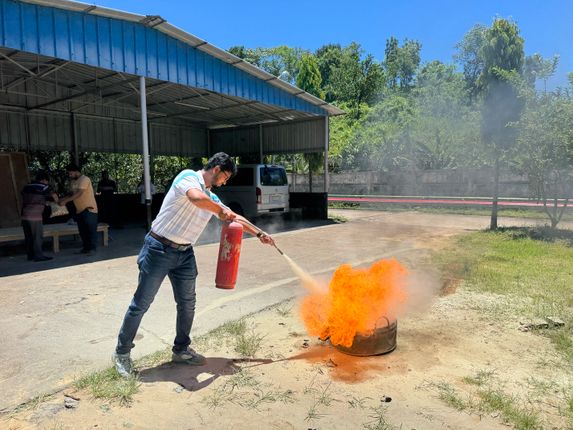
Hands-on practice turns fire safety theory into automatic, confident action.
Selecting a Fire Safety Training Provider
Choosing the right provider is crucial. Look for organizations with a strong track record in Canada, and check instructor qualifications instructors should have real-world experience in fire safety or emergency response and know Canadian regulations inside out.
What to look for
- Format that fits online modules for theory, in-person sessions for hands-on practice; a blended approach often works best
- Complete course content prevention, equipment use, and emergency procedures
- Certification included a recognized, documented credential on completion
- Industry customization content tailored to your specific risks; if you handle dangerous goods, combine fire safety with TDG Certification
- Reviews and references feedback from other Canadian businesses
Cost is a factor, but don't compromise on quality investing in proper training prevents costly fires and protects your most valuable asset: your people. Many providers offer group discounts for larger teams.
Why Choose CHCPTI for Fire Safety Training
CHCPTI, based in Mississauga, Ontario, focuses on practical, accessible safety education for the Canadian workforce. Its Fire Safety course gives workers and teams a documented foundation in workplace fire prevention and response.
What you get
- Self-paced online delivery train around shifts, on any device
- Certificate on completion a record suitable for HR, insurers, and inspections
- No prerequisites written in plain language for every role
- Team pricing a cost-effective way to certify multiple staff at once
- Direct support reach a real person by phone, WhatsApp, or email during business hours
Explore CHCPTI's full range of online safety courses, including WHMIS training, IPAC Infection Control, Bloodborne Pathogens, and BLS certification online. Questions about team enrolment? Contact CHCPTI directly.
Build a Safer Workplace Today
Fire safety training is a non-negotiable part of responsible operations. Give your team the skills to prevent disasters and respond calmly start with a practical, self-paced course and a certificate you can show at your next inspection.
Start the Fire Safety Course →