Starting a new job can be an exciting but busy time. Between filling out paperwork and meeting new colleagues, you may wonder if your employer can ask you to complete safety training like WHMIS before you clock in for your first shift. In Canada, the answer is clear: yes, your employer can require WHMIS training before your first shift, and in many cases, they must. This article explains the legal basis for pre-shift WHMIS training, who pays for it, and what distinguishes WHMIS education from job-specific training.
What Is WHMIS?
WHMIS stands for the Workplace Hazardous Materials Information System. It is a Canadian standard that ensures workers understand the hazards of the products they may come into contact with on the job. WHMIS training is legally required across Canada for any worker who works with or may be exposed to hazardous products. The system covers hazard classification, labels, safety data sheets, and safe handling procedures.
Employers must develop, implement, and maintain a WHMIS education and training program for their workers. This process is not optional; it is a legal duty under federal and provincial occupational health and safety legislation.
Legal Requirements for WHMIS Training Timing
There is no single law that explicitly states “WHMIS training must be completed before the employee’s first shift.” However, the practical interpretation is that training must occur before the worker is exposed to any hazardous products. Since the first shift often involves entering areas where such products are present or handling them directly, employers typically require WHMIS training to be completed before the first day of work.
Workers must receive WHMIS training before they work with, near, or may be exposed to hazardous products. If your workplace stores cleaning chemicals, paints, solvents, compressed gases, or any substance classified as a hazardous product, you are at risk of exposure. The only safe way to meet the legal duty is to provide training before any potential contact occurs.
Employers who fail to provide training before exposure can face penalties under occupational health and safety laws. From a worker’s perspective, completing WHMIS before the first shift is not only a legal safeguard but a practical necessity to prevent injuries and accidents.
Why Training Before Your First Shift Matters
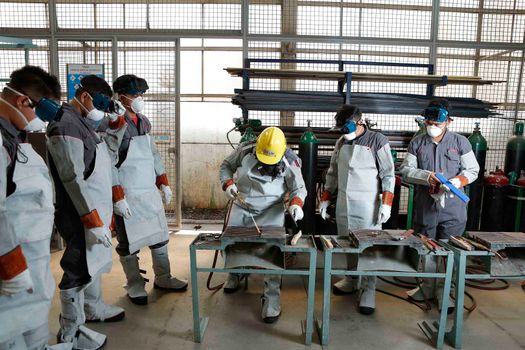
Many new employees assume they will receive safety training during their first few days on the job. While some orientation tasks can wait, WHMIS training is too important to delay. If hazardous products are present in your work area on day one, you need to know how to read labels, find safety data sheets, and respond to spills or exposures immediately.
Consider a warehouse worker or a cleaner who uses industrial solvents. Without prior WHMIS education, they could mishandle a product, inhale toxic fumes, or mix incompatible chemicals. Training before the first shift ensures that workers start their employment with the knowledge to protect themselves and their colleagues.
Employers also benefit from pre-shift training. It demonstrates due diligence and reduces the risk of workplace incidents. When a worker is trained before handling any hazardous material, the employer has fulfilled its duty to provide a safe work environment.
Who Pays for WHMIS Training?
As a worker in Canada, you may wonder whether you must pay for your own WHMIS training if your employer asks you to complete it before starting. The law is clear: employers must pay for WHMIS training and the time spent completing it. You should not be charged for the course, nor should you be expected to take unpaid time to finish it.
This principle applies whether the training is delivered in-house, through an online provider, or at an external training centre. If your employer requires WHMIS certification as a condition of employment, they bear the cost. Some employers may ask you to complete a course before your official start date, but they are still responsible for covering the expense. If a potential employer asks you to pay for WHMIS training out of pocket, that is not in line with Canadian legal expectations.

WHMIS Education vs. Training: What Is the Difference?
Under Canadian law, there is an important distinction between WHMIS education and WHMIS training. Both are required, but they cover different aspects.
| Component | Focus | Content |
|---|---|---|
| WHMIS Education | General principles | Hazard classes, labels, safety data sheets (SDS), pictograms, and the overall WHMIS system. |
| WHMIS Training | Site- and job-specific procedures | Safe storage, handling, disposal, emergency response, and use of personal protective equipment for the specific chemicals in your workplace. |
Education gives you the foundational knowledge to understand WHMIS terminology. Training applies that knowledge to your actual work environment. For example, education might teach you that a corrosive hazard symbol means the product can burn skin. Training would show you where the corrosive cleaner is kept in your workplace, how to use it safely, and what to do if it spills. Both elements must be provided before you begin working with hazardous products.
Does WHMIS Certification Expire?
There is no fixed national expiry date for WHMIS certification. Unlike some other safety credentials, the law does not require recertification every three years by default. However, the legislation states that WHMIS training must be updated whenever working conditions or hazard information changes. If your employer introduces a new hazardous product, modifies work processes, or if the supplier updates a safety data sheet, you must be retrained on those changes.
Many employers and training providers recommend updating WHMIS training every three years as a best practice, even if no specific changes have occurred. This ensures that workers stay current with any amendments to the WHMIS system and do not forget critical safety information. Some industries or individual companies also impose their own renewal intervals as part of their health and safety policies. If your employer sets a renewal requirement, you must comply with it, but this is a company or sector rule, not a national legal mandate.
What Happens If a Worker Refuses Pre-Shift WHMIS Training?
If an employee refuses to complete required WHMIS training before their first shift, the employer typically cannot allow that person to work in an area where hazardous products are present. The worker may be assigned to non-hazardous duties until training is completed, or the start date may be postponed. In some cases, refusal could be treated as a failure to meet a condition of employment, especially if the job inherently involves hazardous products.
Your employer has the right to set reasonable safety requirements as a condition of employment. WHMIS training is a legal obligation, not an optional perk. If you believe your employer is demanding training that is excessive or not related to your actual work, you can raise the concern with your joint health and safety committee or contact your provincial workers’ compensation board. However, in most situations, completing WHMIS before your first shift is a reasonable and legally grounded expectation.
Frequently Asked Questions
Can my employer make me complete WHMIS training before I am officially hired?
An employer can ask you to complete WHMIS training as a condition of starting work, but they must pay for the course and the time spent on it. If you are not yet an employee, the employer may cover the cost directly or provide access to free training. You are never required to pay for mandatory workplace safety training yourself.
Do I need WHMIS training if I only work in an office?
If your office environment uses hazardous products such as cleaning chemicals, toner cartridges, or laboratory materials, you may need WHMIS training. The legal requirement applies to any worker who works with or may be exposed to hazardous products, regardless of job title. Check with your employer about the specific hazards present in your area.
Is online WHMIS training acceptable for meeting the legal requirement?
Yes, online WHMIS training can cover the education component of WHMIS. However, the job-specific training component must be provided by your employer in relation to your actual workplace. An online course alone may not fully satisfy the legal requirement if it does not address the specific products and procedures you will use. Many employers combine online education with on-site orientation to meet both parts.
How long does WHMIS training typically take?
A standard WHMIS education course takes about two to four hours to complete. The job-specific training component can vary from 30 minutes to several hours depending on the number and complexity of hazardous products in your workplace. Combined, most workers can finish the entire WHMIS requirement in less than one workday.